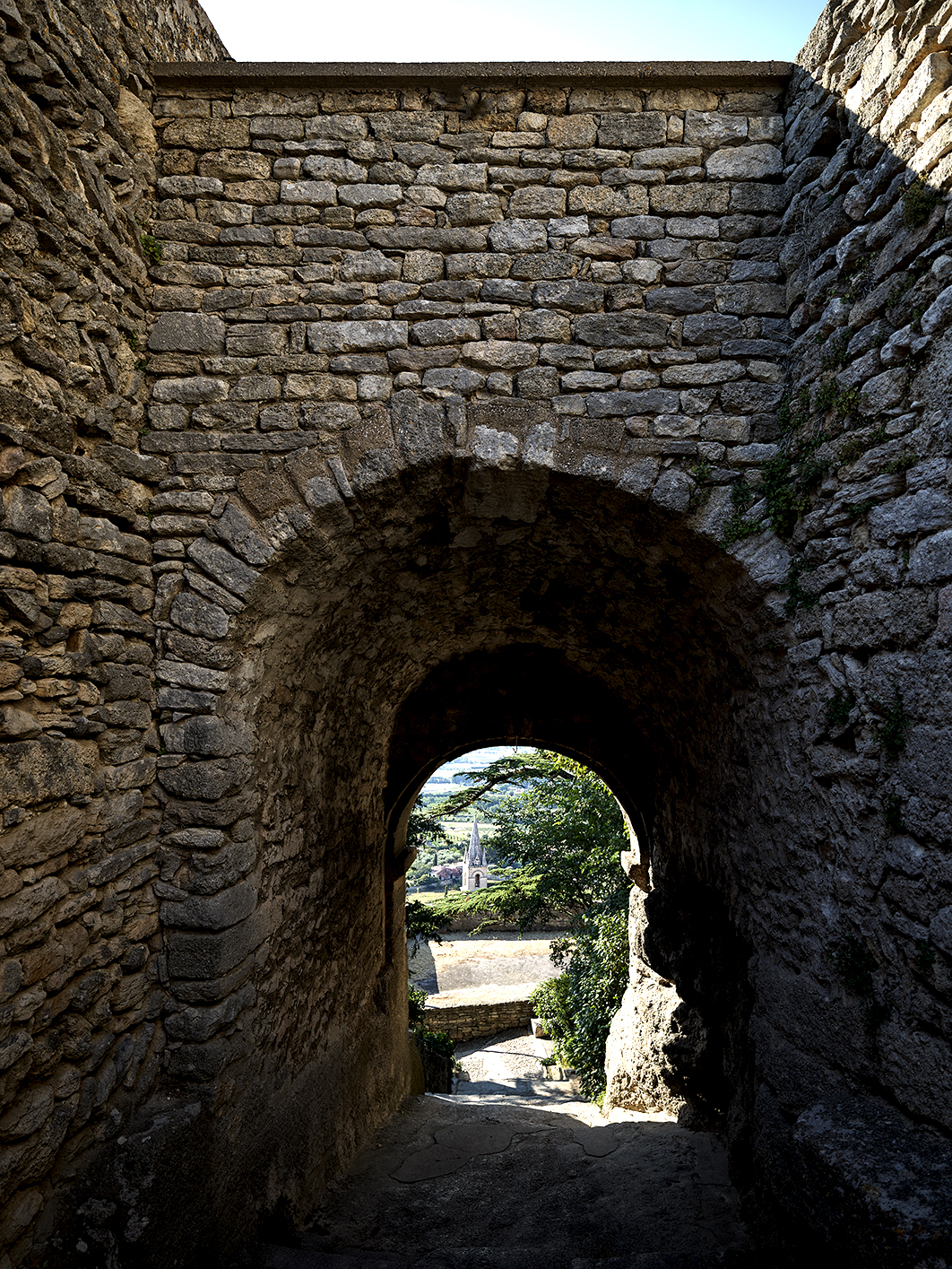
A faint light, filtering from beneath a room’s door, appeared as I ascended the staircase. Upon entering the room, sunlight streamed through a large bay window at a sharp angle. The window stood out as bright blue and white. The archway and alcove as golden brown. However, some locations remained without light.
Capturing light at a desired angle is the most important aspect of my work as a photographer. A relatable story behind it has proven to be almost as important.
I have not experienced a setting like this in recent memory. It was only by chance that I could capture the image. With photography, I usually leave nothing to chance.
Bay Window in the Castle of the Knights Templar & Convent of Christ
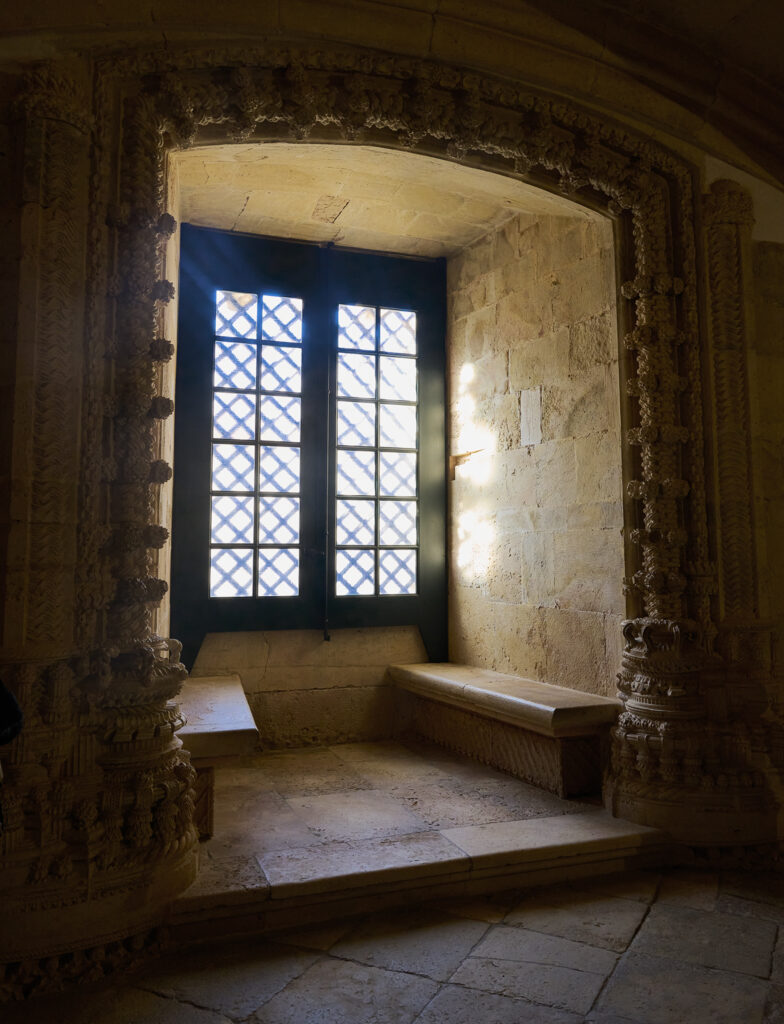
Bay Window in the Castle of the Knights Templar & Convent of Christ
The second floor of the Castle of the Knights Templar & Convent of Christ in Tomar, Portugal, was the setting.
Its unique and rich history set the structure apart. Its origins trace back to the twelfth century. The structure displayed the former might of the Papal States and the power and influence of Portuguese royalty. The Moors and Napolean, six hundred years apart, attempted to take the castle and failed.
I encountered these kinds of images and storylines throughout my Portugal photoshoot.
Possessing a deep history, this country and region contain contradictions.
Portugal’s western and southern borders are the Atlantic Ocean. It features a broad range of environments.
The Silver Coast
On the west, the Silver Coast exceeded expectations, offering a blend of natural and man-made splendor.
The Striped Homes of Costa Nova
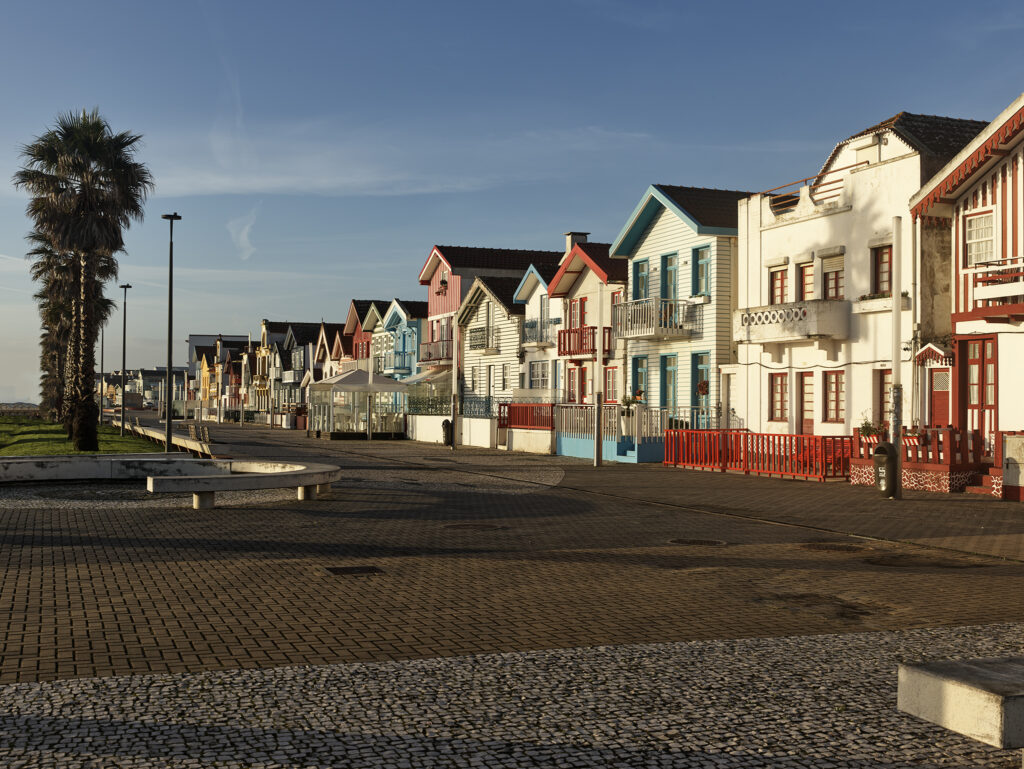
Costa Nova Portugal at Sunrise
For hundreds of years, the Silver Coast remained a collection of fishing villages. Huts, once used for drying and salting fish, are now radiant, striped-color holiday residences at sunrise. The striped homes of Costa Nova on the Silver Coast provide an example.
The Silver Coast offers hundreds of miles of white-sand beaches. On a late afternoon, perhaps an hour before sunset, I found what for me is the perfect dune.
Late Light and The Perfect Dune
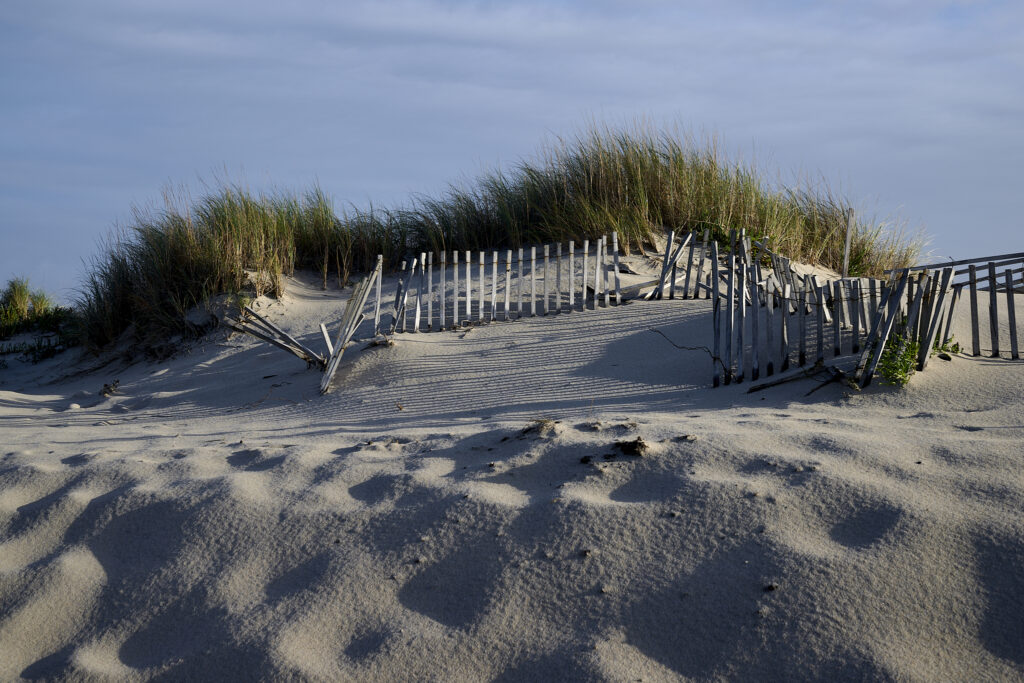
End of Day on the Silver Coast
My perfect dune is full of white sand drifting ever so slightly because of the wind from the ocean. The dune has tufts of native grass bending slightly in the breeze. It contains a battered and tangled fence made of wood and iron. The setting features deep shadows from the late afternoon.
This dune had it all. Portugal delivers again.
The Algarve
The Algarve is on Portugal’s southern coast. Colorful, rocky, filled with sea caves and wide beaches, The Algarve is a rare and special place. One rarity is that you can experience each one in urban areas and in natural settings. Vibrant gold, green, yellow, and red colors can appear spectacular, influenced by the time of day and the sun’s angle.
Its beauty is not its only remarkable trait. So is its history.
The Algarve once served as the nation’s center of power and commerce. It did so for over two hundred years. Portugal calls the era the Age of Discovery.
Magical Coastline
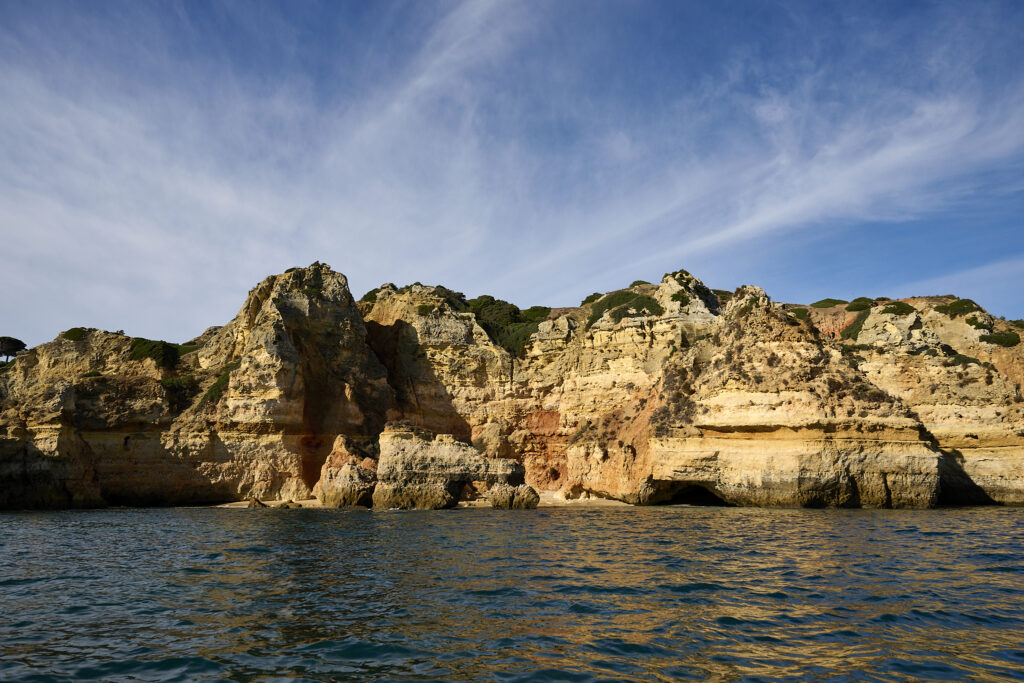
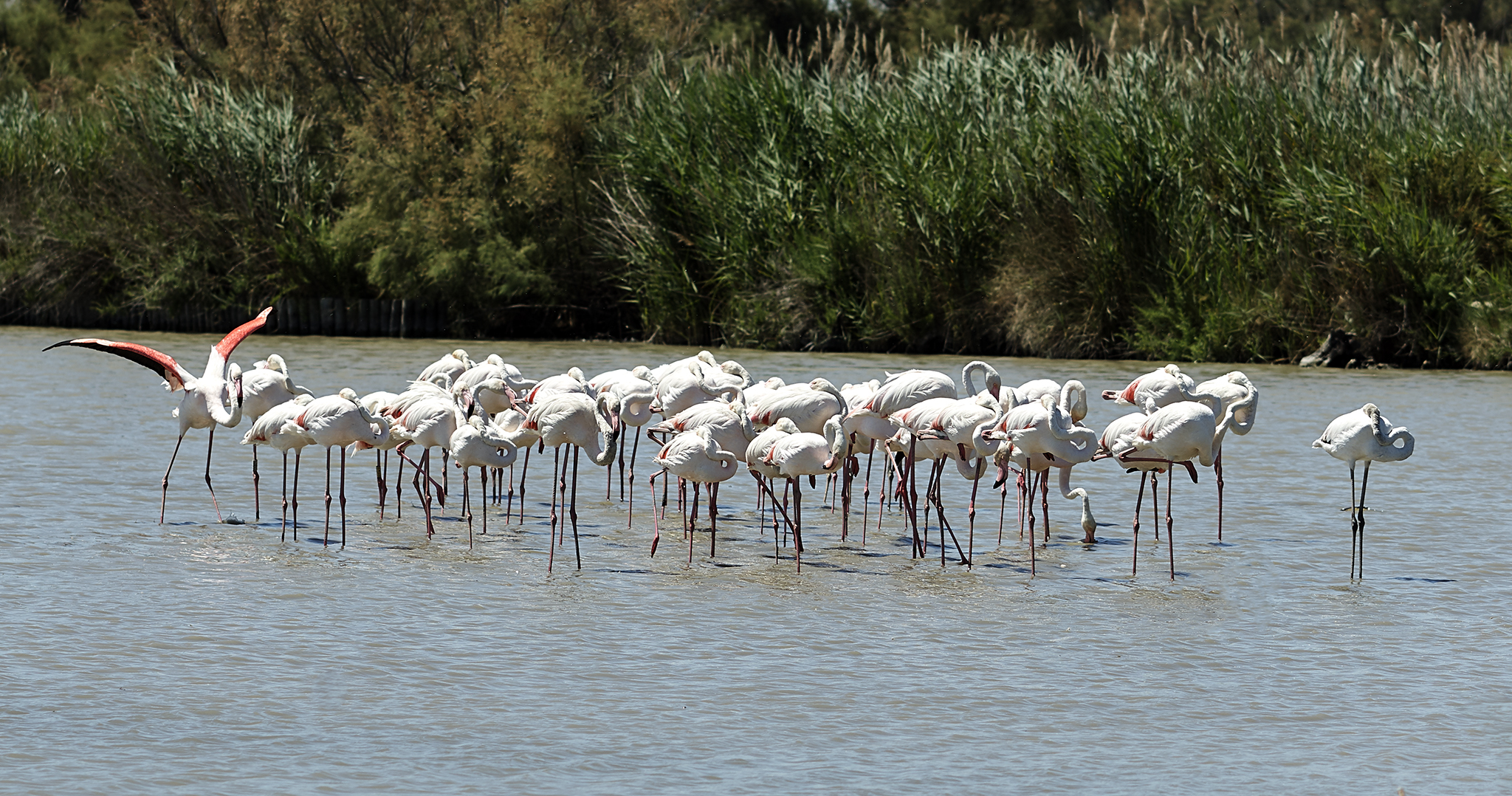
The Algarve Coast.
Once considered the End of the Earth, I captured this magical coastline in almost perfect light. European Exploration of South America and the establishment of sea routes of trade with India first began from the Algarve in nearby Lagos. The Algarve was not the end of the Earth.
A Image with Complications
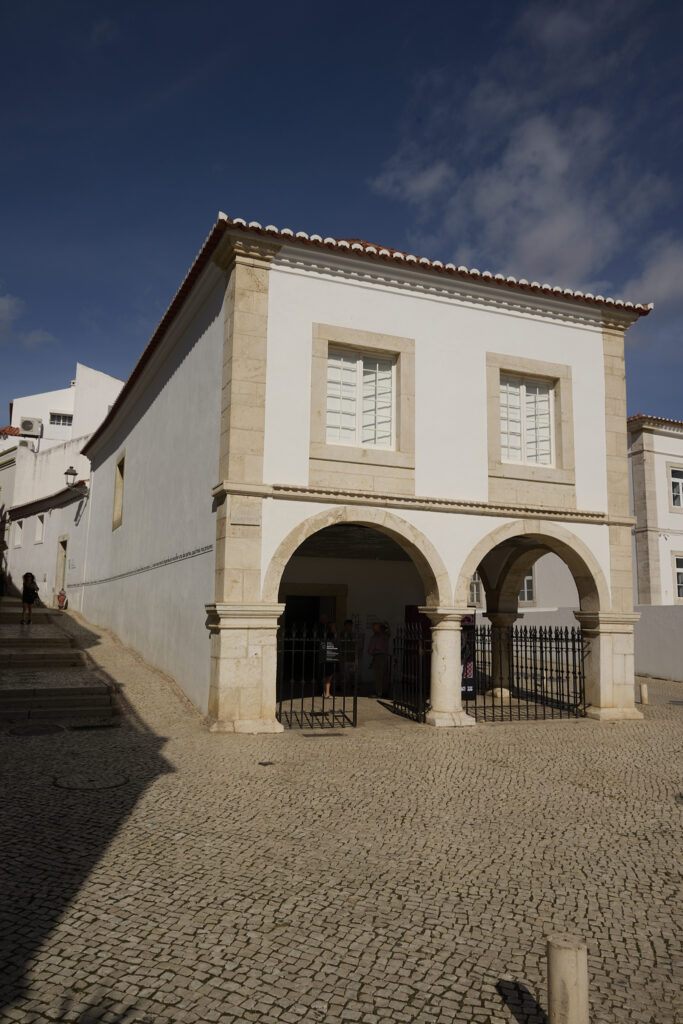
A building with. a complicated past
A whitewashed building in Town Square, bathed in bright sunlight, was another subject. The building’s history as the location of the first documented sale of humans as slaves came to mind when I captured the image.
Each was less than five miles apart.
The interplay of light and color on window frames can be a fulfilling experience for a photographer, even though it differs from landscape images.
Alfama District of Lisbon
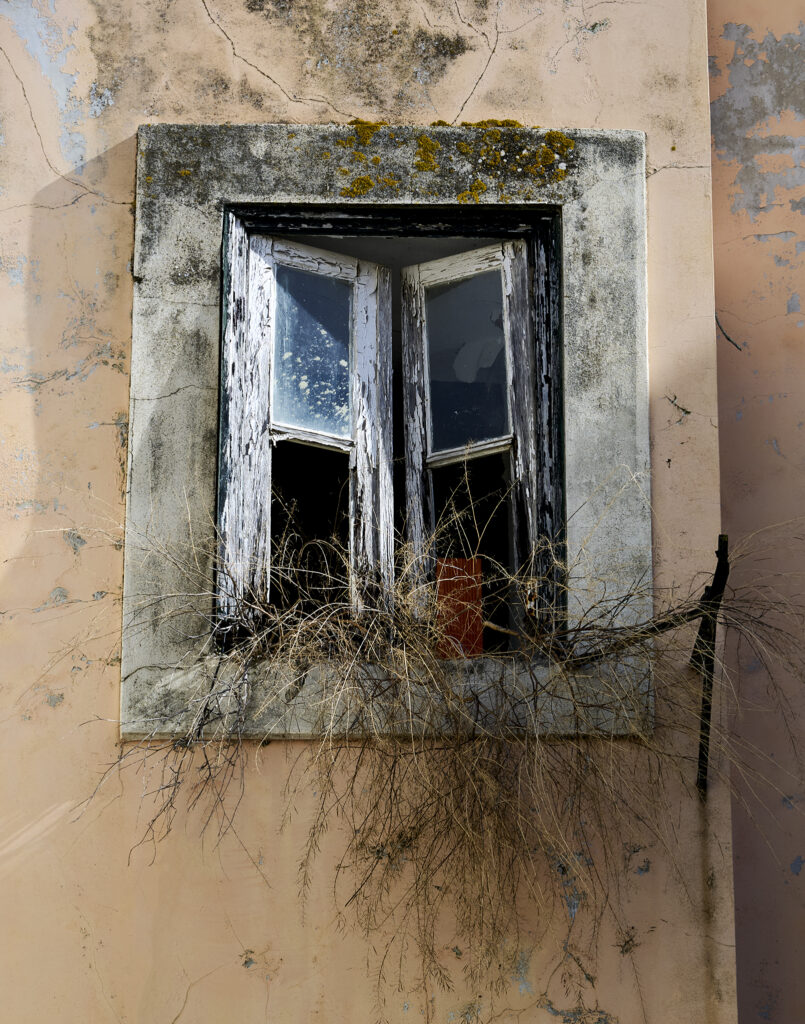
Window of Opportunity
A window in the Alfama District of Lisbon presented itself on a late afternoon. It was a section of Alfama in decay. The alleys were damp, dark, and as narrow as any I had seen before. The building appeared to have no recent human activity. It was in a setting that only the best spy and thriller novels could offer.
Duoro River Valley
North of the Alfama District by several hundred miles, a scenic river valley offers a cure for nearly all afflictions. Its economic potential, if realized, can save a country. Portugal’s Duoro River Valley is such a place. It has been Portugal’s Showrunner for centuries.
You’ll find the Duoro River Valley’s most picturesque area between Peso da Regua and Pinhao. A deep river gorge filled with vineyards as far as the eye can see, make it the most valuable.
Different from the experience while capturing the image at the Castle of the Knights Templar & Convent of Christ, I know what I want to capture and when. It is of the bridges at Peso da Regua from high on the riverbank in the late afternoon.
It’s safe to say that the path to where I wanted to be was arduous. However, the reward was high.
Right Time Right Place
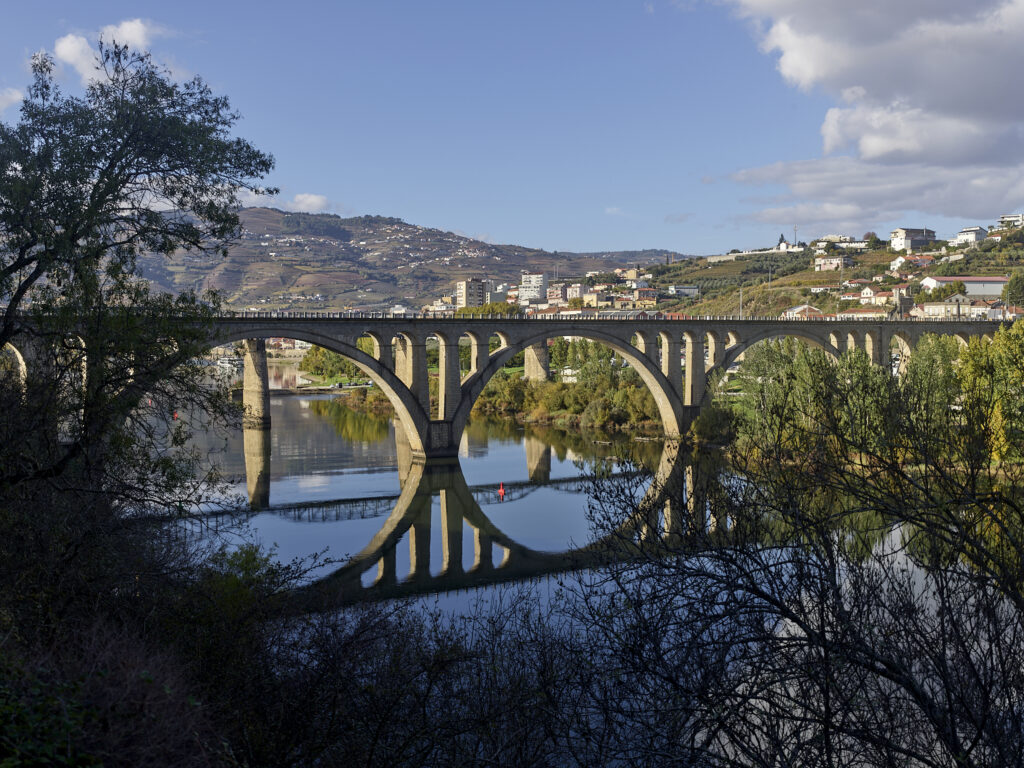
The Duoro River at Peso da Regua
The view and resulting image had it all for me: the light’s angle, the storybook-like color depth of a village, and a historically significant bridge. Each subsequent viewing makes it feel as if you can step into the image.
Last Thoughts
Upon reflection, Portugal delivered on every aspect I desired to capture in my photoshoot. The images and stories above describe but a few.
I expected its landscape and terrain would be enchanting and diverse. It was. I found the countryside and rural areas to be more engaging than the major cities.
I’d love another trip to Portugal.